Defining “Building Relationships”

All educators know we need to build relationships. All educators believe we build relationships. All educators are correct – relationships are always being built and/or influenced! The key is: what kind of relationship is being built? Is it one of trust or suspicion? Once built, how is it being influenced? Is it being reinforced or newly defined?

I’ve been in and heard about countless conversations over my quarter century in education where the term building relationships isn’t clearly defined. A lack of clarity can lead to confusion, frustration, and cause damage to the relationships among the adults engaged in the conversation. Oversimplified, that convo may go like this:

Adult 1: You need to build relationships with our kids.

Adult 2 or Team: We do!

Adult 1: No, you don’t. You need to get to know our kids.

Adult 2 or Team: We do!

Adult 1: You need to do it better.

Adult 2 or Team: How?

By this time, emotions can be on edge and escalating, so the conversation doesn’t go much further. I propose a contemporary definition that may be able to provide clearer guidance in building relationships. I propose we mimic Artifical Intelligence! Ads, shows, and travel destinations are intuitively suggested to us – because AI is listening! AI is reading us, noticing our preferences, and asking prodding questions. It serves us as best it can in the moment, while continuously considering feedback to become even more adaptive. It wants to engage in any and all opportunities. It wants to get to know us as best it can so it can most effectively and efficiently meet our needs. THIS is what we, as educators, must do with our kids, families, and each other if we want to effectively build relationships. Much attention is being given to how we can leverage, block, and mitigate AI in education; however, when it comes to building relationships, the sooner we can mimic Artifical Intelligence, the more human we can become in our daily interactions and support of one another.

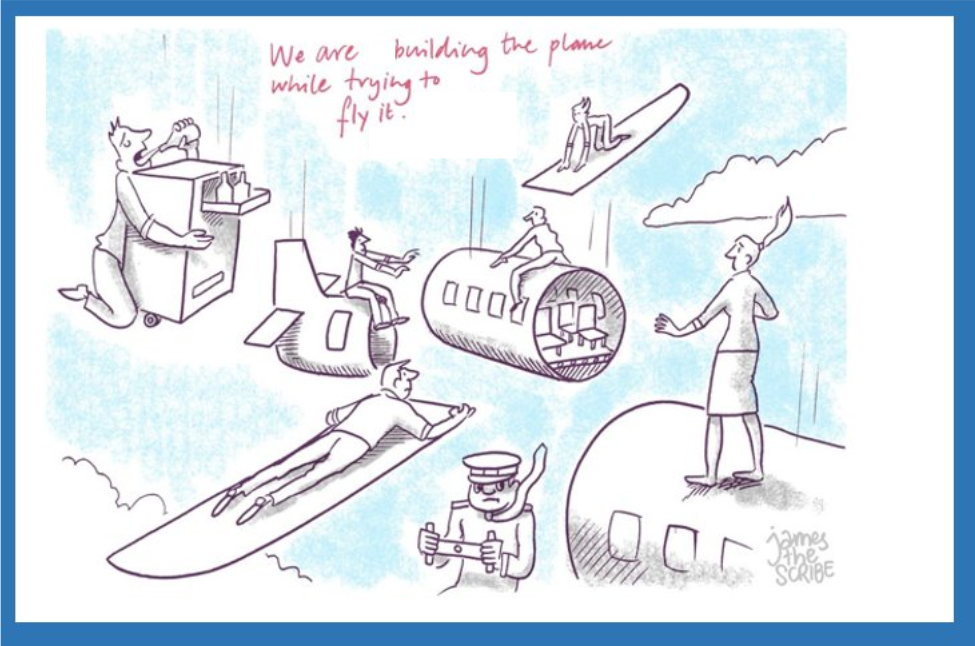
Please DO NOT Build the Plane While You Fly It!

Have you ever been involved in a push to implement something in which leadership likened rollout and implementation to “building the plane while you fly it”? During my 25 year tenure in education, I have found myself here several times. And unfortunately, it’s always with initiatives of the grandest scale with the largest impact on kids, families, staff, and culture. I can also attest that none of the implementations have ever been successful.

Has a plane ever been built while it was flying? Is there research to show that this rollout method and implementation strategy is preferable for the biggest initiatives in education? Would you put your own child on a plane to be built while it flies? If not, then I strongly plead that we stop doing so with one of, if not the most valuable commodity and resource we can offer our kids and future society: education.

I am not suggesting people and organizations shouldn’t be flexible and agile. I am not fantasizing that things should always go according to plan. I am suggesting when research shows significant and meaningful change can take as long as 7 years – it’s because, when done well, this is the shortest implementation time expectation. To rush only sets the organization back further the wasted time multiplied by the factor of destruction incurred (trust lost, relationships ruined, support withdrawn, etc). I am suggesting as leaders we be more responsible with the trust, relationships, and support we’ve been given and earned when considering the allocation of resources (time, people, funds) and potential impact influencing education, the invaluable commodity we are entrusted to bestow upon our kids and future society.

There are numerous frameworks that can assist, such as the implementation of Professional Learning Communities (PLCs) and Multi-Tiered Systems of Support (MTSS). Our kids, families, staff, and future society deserve more than to be rushed onto a plane to be built while it flies.

Equity Conversations: Avoid These Two Assumptions

As a Black man, I have intentionally waited to write this post for several reasons. Among them: first, to allow myself time for slightly less scathing tongue-lashing in my writing in an effort to professionally suppress my intense frustration, disgust, and anger (which, in itself, speaks to systemic oppression!), and secondly – and related – I’ve been wrestling with the embarrassingly absurd notion that a post like this may be “permitted” during this current social time and place, but may have faced harsh criticism and/or consequences just a few months ago – or potentially a few months from now should the issue of equity slowly and gradually again recede from the news of the privileged and return to its forever home in the systemic imbalance of everyday experiences and lives of the oppressed and marginalized, “quietly” in the shadows.

Although I share this disclaimer, I will not apologize for the hurt of my experiences. I will not apologize for being hardened by a society that systemically perpetuates oppression by repackaging the last generation’s anguish and rebranding it to a new generation, giving a false sense of evolution and progress.

As the everyday lives and experiences of the oppressed and marginalized have recently gone viral as news to some, conversations around equity have again resurfaced as a buzz word priority for many organizations. With the scores of hands of leadership that have been uncomfortably forced to give the topic of equity some space near the top of priority lists, a spot on meeting agendas, and some roundtable time at gatherings for the time being, I would like to offer two assumptions to avoid in these surface level efforts to take a step toward doing the right thing.

Assumption #1: Declaring a space safe makes it a safe space.
Uuuuummmm….no. That’s not how safe spaces work. Not even close. If we have to or feel the need to declare our spaces safe, there’s a reason: because it’s probably not! Spaces are inherently declared safe as a result over time of daily practice creating culture. If we’re in a position to declare a space safe, we are probably also in a position – purposefully or not, knowingly or not – surrounded by some yes people. As such, we are at risk of only being privy to self-fulfilling perceptions and feedback. Leverage relationships, personalities, and status levels throughout and across the organization as liaisons for feedback and information. Offer various avenues and platforms for input, and give time. Respect and honor that the space may not be safe, and the time may not be right. And afterwards, follow up with prompt communication, responses, and action so people know they’ve been heard and trust the process. As this becomes routine and daily practice, oratory situational declaring of space as safe will no longer be necessary; people regularly engaging and communicating with trust will silently inherently declare our spaces safe.

Assumption #2: We need a list of new things to try that prioritizes equity.
Nope. Sure don’t. We don’t need lists of “new” things to try. Save your meeting. I’ll give you your (bare minimum that I hear every time I have to sit through these!) list: build relationships, put culturally diverse posters on our walls and books on our shelves, provide professional development, and review our hiring practices. Those tend to dominate the lists of organizations who repeatedly find themselves scrambling to call a meeting in response to a viral video of inequity to proclaim how important equity is and gather some ideas to try moving forward equitably. Whether it’s those “new” things or others, if you find yourself in an organization just now claiming that equity matters and called a meeting recently for ideas, I can tell you not only will your brainstorming list be the same as the list you came up with in response to the last viral video, and the one before that, and the news story before that, but it will also be accompanied by the same action plan: 1. Feel great about the meeting you just left. 2. (optional) Wipe away the tears of being emotionally caught up in someone else’s lifetime of plight for 60 minutes. 3. Try not to lose this list – or maybe try to remember at least one of these items – so the next meeting in response to a viral video can be shorter. 4. Back to business as usual tomorrow – the same business that leads to meeting scrambling in response to viral videos of inequity.

We don’t need ideas. We need candid conversation about obstacles. We need to look each other in the eye, and ask why we didn’t implement these ideas after the last viral video when we made a list. Or the one before that. Or the one before that. Or simply void of viral attention and do so simply because it’s the right/humane thing to do?? These ideas are not new – but if they are new to our organizations, then the candid conversation must be around why these ideas are new. What have we been doing instead? Has what we’ve been doing been working to make education accessible and equitable to all students and families? We have real time data at our fingertips – in our pockets, for crying out loud – that suggests that the people in the viral videos are not the only ones experiencing these travesties. These people have family members. These family members live in our communities. They graduated from our schools. They have kids at our schools. Some are kids in our schools. Some work in our schools.

If recent events over the past few weeks or months have reinvigorated our value of equity, then our candid conversations need to be around why. Why was the value of equity in our organization at a level that needed reinvigorating? Values are fundamental unwavering commitments. Values that come and go are not values at all – they’re fads. Equity of human life is a value, not a fad. Look each other in the eye and ask why equity of human life has been a fad in our organization. Look each other in the eye and ask how our organization can claim to put kids first unconditionally, yet treat equity of human life as a fad.

To clarify, when I reference human life, it is all encompassing: life that is physically tragically taken away, as well as life that is metaphorically tragically taken away, such as, living in a society that restricts freedoms and prohibits opportunity, and an educational system that sifts and sorts with tremendous advantages to the chosen ones and excruciating hardship for the denied.

Why haven’t we already built relationships? Why haven’t we already put culturally diverse posters on our walls and books on our shelves? Why haven’t we already provided professional development that empowers staff to transition posters on walls and books on shelves to culturally relevant and responsive teaching and learning? Why haven’t we already reviewed our hiring practices? These are floor level basics. Do hard and soft data justify and support the continued practices that define our organizations’ cultures? Or do they suggest years – or decades – of shackles, obstructions, obstacles, and excuses to implementation of our equity ideas lists?

One common obstacle(?) I hear around building relationships, getting to know our kids, and prioritizing the social emotional wellness aspect of our kids and families as human beings is, ” I’m not a social worker. I don’t have a degree in social work. I am not comfortable.” I struggle with this citing of non-expertise as a valid excuse on many levels. I’ve seen staff members darn near come to fisticuffs and friendships deteriorated over the soccer coaching position – when none of them had played competitively. I see staff without hesitation race to a student who has fallen off the playground equipment – and I know they do not have nursing degrees. I see staff magistrate magnificent creations in their classrooms, doors, windows, hallways, auditoriums, gymnasiums, cafeterias, and offices, and do so without a background in interior design. I see staff speak and debate as union members, emphatically demanding the floor, without ever having been in speech and debate. Why then, can’t we reach across, connect with, get to know, and put our guard down for a youth who spends anywhere from 41 minutes to 5 hours per day with us “in our care”?

Questions to candidly ask ourselves:
Is our mission and vision filled with buzz words, fads, or values?
Does our School Improvement Plan reflect and support our mission and vision?
Does our daily practice support our School Improvement Plan?
Do our systems support effective implementation of daily practices?
Do our assessment measures capture what’s important (i.e., student outcomes, adult fidelity of implementation)?
Is what we’re doing working?
How do we know?
Who benefits from what we’re doing? Who’s excluded? Does data support the responses?

For questions answered in the negative, follow up with:
Why has this been allowed to happen?
What needs to happen NOW for this to be different by TOMORROW?

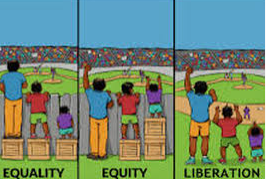
These are not rhetorical questions, but questions to look each other in the eye and ask. And answer. And awkwardly stare and wait in silence as long as it takes for a response. Because taking action to support fosters equity, and removing barriers transitions to liberation. Human life deserves and is worth it.

Difference between RtI & MTSS: Who Cares!


Inspired by a great post by Stacy Hurst, “What is the Difference Between RtI and MTSS” (very informative!), and all the thought-provoking reflective readers who commented, I began to reflect. I reflected on my opinion on the matter, and my experiences which led to my resulting opinion. I came to two conclusions: 1) I have an opinion on the difference between RtI and MTSS, and 2) Who cares!

I would rather take the energy and attention of that potentially spirited debate and focus on what really matters: kids. If the process in place identifies the needs of kids, staff works together to address and meet those needs in systematic ways, and do so with a least restrictive approach, does it matter what we call the process?

As an educator, I prefer we collaboratively design a routine process with which our kids’ needs are identified, addressed, and met in a least restrictive environment than quibble over which acronym to assign to it. As a parent, I prefer my kids’ schools know them as learners and people, meet them where they are, and progressively move them forward in a data-driven way in a least restrictive manner than attend out of state conferences by presenters recycling buzz words from the business world of 20 years ago and injecting them into today’s education landscape to make for impressive Curriculum Night jargon blabbing.

Our kids need us – especially with the challenges we see in today’s society. Promptly give them what they need, and I’m fairly certain they won’t question what you call it.

Restorative Practices: Set Expectations and Hold Students Accountable

Tirelessly dealing with the same unexpected behaviors? Losing valuable instruction and learning time due to disruptions? Wish dinner conversations weren’t filled with your daily discipline issues? Consider restorative practices!

Restorative practices focus on community building in your classroom. Students work together to set expectations. By explicitly describing them and agreeing to the standard, achievement of expectations is objective and identifiable by every student. This fosters an environment of communal accountability.

In a traditional approach, community building time sometimes manifests itself as the teacher telling students what the rules are, the “don’ts” if you will. This can send a message that the purpose of good behavior is to avoid “getting in trouble”, which sometimes can include being removed from class for minutes, hours, or days. The teacher becomes the “police officer”, charged with catching all misbehavior, punishing it, and protecting the innocent.

The nature of restorative practices provides expectations (rather than rules) of behavior to model. Meeting expectations strengthens the community. Respecting, contributing to, and being a part of the community is valued. Not meeting expectations lets down the community, and is an infraction of the formal or informal contract the community created and each individual co-signed. Being exiled from the community is in no one’s best interest, so the class collectively works together to protect the integrity of the community while also addressing behavioral infractions. Leveraging respect for the community and utilizing the tool of empathy, students restore damage, repair relationships, and re-visit agreed upon norms.

Restorative circles are one way to configure regular and routine community building time. When used only to address misbehaviors, restorative circles are futile tasks associated with empty “discipline”, so be sure to incorporate them as the platform with which your classroom community handles everyday business. For more on circles and other restorative practices to employ in creating your classroom community, check out these 5 strategies.

Source: Lucille Eber. 7th Annual NYC PBIS Leadership Summit June 13, 2014.

Source: Lucille Eber. 7th Annual NYC PBIS Leadership Summit June 13, 2014.

Classroom Visits #500c

teamwork word sphere

This past school year I accepted the #500c challenge (thank you @eduleadership!): visit 500 classrooms over the course of the school year. In making visits part of my daily routine, I had been in 500 classrooms by December. Being in classrooms as an administrator has school-wide benefits that shouldn’t need much explaining, so I’ll briefly highlight only a few. An admin presence in classrooms can:

  • proactively and/or subconsciously pre-empt decision making and behaviors that do not meet expectations
  • make the evaluative process and conversations more authentic
  • close the “us v them” gap between teachers and admin, building trust
  • provide a finger on the pulse of the school, potentially leading to more efficiently proposed expectations and directives
With all the time I spent in classrooms this year, I began realizing that it is not an independent experience conducted in a vaccuum; the perception and impact are influenced by the culture and climate of your building. Here are some examples, in no particular order:
#1 What’s he doing here? vs What can he do while he’s here? One view is defensive, and may seek counsel from the building union rep, while the other view is collaborative and is gracious for the extra set of eyes for reflective purposes, hands for instructional purposes, or both!
#2 Why isn’t he in the office handling discipline? vs He’s out in the building minimizing discipline. One view sees discipline as a reactive approach that needs administration anchored in the office, while the other sees discipline as a proactive approach with administration out and about modeling and enforcing expectations.
#3 What if he sees a lesson that wasn’t my best? vs I’m glad he’ll see all these great lessons! One view is very private, and wants to shield the big bad administrator from seeing an imperfection, while the other takes comfort in knowing there will be numerous data points to support the teacher’s professional self-perception.
#4 (variation of #3) I hope he doesn’t see a lesson that isn’t my best… vs I hope he sees a lesson that isn’t my best! One view wants to sweep areas of improvement under the rug, while the other is eager to learn, build, and grow in said area.
#5 Doesn’t he have any work to do? vs My instruction and the learning in my classroom are a priority, and are his work. One view thinks administrators have no work to do (or don’t do any work), so they just stroll through the building looking to meddle in teachers’ business, while the other view is appreciative that they and their work are a valued commodity in the learning environment.
Teachers, I respectfully request that you leverage the luxury of another education professional in your classroom. Administrators, I urge you to be a physical presence in your building. Upper Administrators, I implore you to allow the lower Administrators to serve from the inside and out: office, hallways, and classrooms.

team

Social Media: Parents, Kids, & Schools

Times are different now. Devices are prevalent among our kids. They transcend cultural, socio-economic, and grade level boundaries. Despite how traditional or conservative homes may be, devices are abound and our kids are digital natives.

As a disciplinarian, I’ve seen infractions involving virtual disrespect via social media platforms steadily increase. Devices have become an extension of some of our kids’ hands. Any time there is something of note taking place (entertaining, awe-inspiring, confrontational…), some of our kids seamlessly take their phones out and begin recording–almost as if it’s an involuntary muscle movement!

Once the phones are held up in their majestic recording positions, they have a spellbinding effect on all involved: everyone is now “on stage”. Some kids may feel an obligation or pressure to perform. Performing can take the form of goofy behavior, which can purposely or accidentally lead to harm or damage . Performing can also take the form of macho or aggressive behavior, which can lead others to feel threatened or unsafe. When on stage, our kids’ “performances” will be immediately posted and made available for the world to view, so this brief window of time, adrenaline, and anxiety can cause impaired decision-making and poor behavior in an effort to “steal the show”.

In the event this “performance” takes place out of school, staff are not privy to the causal incident or the back and forth escalation via social media throughout the evening/morning/weekend. It follows then that no pre-emptive measures are taken by the school, and upon arrival on school grounds…BAM: everything comes to head. In the wake of the boil over, school staff is left scratching our heads, while parents cannot believe that our schools allow such behaviors to take place, then label our buildings as “unsafe”.

Parents and guardians, we need your help. Often times–if not all the time–schools are oblivious to what transpires on devices you have purchased for our kids, using data plans you pay for, on accounts you may or may not be monitoring, on time that often is outside of school hours. Schools cannot manage this on our own. We are happy to help you promote digital citizenship and respectful behavior on- and off-line, and welcome your partnership in preventing or pre-empting escalation with information you relay to us; however, we desperately need your assistance on the frontline to help prevent the causal behaviors and incidents.

Please:

  • provide clear and stern expectations upon presenting our kids with devices
  • frequently and regularly check in on account activity by asking our kids to show you the latest threads on their accounts, or spot check conversations
  • know our kids’ usernames, passwords, and screen names. If you’re really brave, have them tell you their friends’ screen names…
  • know that our kids are accountable for the activity of their accounts
  • know that grounding our kids from their individual devices may only be a minor inconvenience–or no inconvenience at all–to continuing their online engagement (via other devices in the house, a friend’s device, library, internet café, etc.)
  • know that our kids may have multiple accounts, usernames, passwords, and screen names–some of which they may not share with you, thus making you oblivious to some of their activity..
  • understand that engaging online is a choice, and although it may not be possible to avoid all negative encounters, it is absolutely possible to minimize/discontinue/block them

If you have ways home and school can partner together to encourage a safe virtual environment to help protect the physical environment, please respond and share!

Testing IS the Answer

standardized test

I am late to the party on this one, but I’ve finally realized it: testing IS the answer! My favorite NFL football team has not won a Super Bowl in decades. I’m not an NFL coach, GM, owner, and have never played in the NFL…BUT I know exactly what it takes to win a Super Bowl: testing.

I think that once the NFL season begins in July, my favorite NFL team should test all its players in the 40 yard dash, shuttle run, verticle jump, and 225 lb bench repetitions. This should only take about a week to do for each cohort of players. Although access to much of the facility’s resources will be prohibited during this testing time, it will only be for a 4 week cycle to get all players tested.

After the 4 week cycle, practice will go on like normal–except for the players who did not score well. They will do extra 40 yard dash, shuttle run, verticle jump, and 225 lb bench repetition activities in addition to their regular football practice schedule and/or do these extra activities in place of parts of their regular football practice schedule. To make sure we are building winners, they will be tested in these areas every 2 weeks or so, in place of football practice, to monitor their progress.

The entire team will then be tested again in September. Again, players will only miss one week of practice, and access to the facility’s resources will be prohibited for only the new 4 week cycle to get all players tested. This testing period (and all testing periods) will provide critical information–hundreds of pages of reports–as to how our players are learning and coaches are coaching. There may be players cycling in and out of extra drills and progress monitoring during this–and each–off-testing phase.

To remain sharp and lock in on the division title, we will test again in November. We will again miss only a week of practice, while prohibiting access to much of the facility’s resources for only another 4 weeks. This will provide valuable progress monitoring data to drive the next phase of practices, as well as continue making big picture decisions for our organization (coaching staff, practice methods, improvement goals, etc.).

To stay sharp during our playoff run, we will test again in January. This final testing period will take us right into the Super Bowl in early February. January’s testing data, along with the previous 3 cycles of testing and data (thousands of pages of reports!), should not only prepare us to play in the Super Bowl, but should also provide a very good predictor as to how we will perform in the Super Bowl.

So, NFL owners, below is the blueprint to winning a Super Bowl this season. You’re welcome.

                                                             2016-17 Football Schedule
July 28-30 Camp opens, football practice
July 31-Aug 27 *Testing
Aug 28-Sept 18 Football practice
Sept 19-Oct 15 *Testing
Oct 16-Nov 16 Football practice
Nov 17-Dec 14 *Testing
Dec 15-Jan 3 Football practice
Jan 4-Jan 31 *Testing
Feb 1-Feb 4 Football practice
Feb 5 Super Bowl
*Allow time and flexibility for malfunctioning and incompatibility of equipment to abruptly shutdown testing sessions for hours or days at a time.

Not a football fan? No worries. Here’s an analogy for you…

My home state of Illinois is in a world of dysfunction as it pertains to its budget. If you are not aware, here are some…highlights(?)…including the lack of funding to provide free public education. Nope. Not a typo. The lack of funding to provide free public education: ISBE Estimate of Number of Days School Districts remain open 6.17.16.

Now, I am no law maker. Nor am I a finance guy by trade. Nor did I attend law school. Nor do I teach Economy or Business classes…BUT I know exactly what it takes to balance a state budget: testing.

All lawmakers should be tested on their ability to balance a state budget. Each testing session will only require one week away from the daily work of balancing the budget, and would only prohibit access to major resources in completing everyday work for balancing the budget for 4 week windows (to allow for all lawmakers to be tested). To keep our lawmakers sharp at budget balancing, this will occur 4 separate times during the year. Lawmakers who do not meet scoring benchmarks during testing will receive support in addition to their everyday work, and in many cases, will receive support that replaces their everyday work in balancing the budget. And don’t worry…time will be set aside from the everyday work of balancing the state budget for disrupted and postponed testing windows due to technical difficulties.

There you go lawmakers. The blueprint to a balanced state budget: 4 weeks away from balancing the state budget to assess your budget balancing aptitude, and 16 weeks without access to major resources to balance the state budget so that we can assess your aptitude in balancing a state budget. Problem solved. You’re welcome.

Now, to find a way to apply this to Education and student learning….

P standardized testing  student standardized testing

standardized testing hopscotch

Standardized assessment hopscotch

Little Things Mean A Lot

little-things-mean-a-lot-quote-1

It’s cliche, but so true. Little things mean a lot, in daily life and in our profession of education. Sometimes we have to set aside time to reflect on the little things that have made a difference; other times, our attention is drawn to them with a thank you note or words of appreciation. I’ve learned it’s not always the action of little things that have impact, but the absence of doing little things can be just as impactful.

The absence of doing little things. One of my students, I’ll refer to him as Darrell, had intensive and deep social emotional issues. These manifested themselves daily in major behavioral infractions. As his Assistant Principal, I worked with him on the back end of infractions, as well as with him, his family, and our school team proactively on the front end.

I met with him regularly, whether it was reactively on his terms or proactively on mine. We had finally hit a stretch where things seemed headed in the right direction. I was able to praise him during our proactive get togethers during the stretch.

I got caught up in meetings, appointments, and other things requiring my attention. I missed a couple proactive meetings with Darrell. I was nervous. No news. No news was good news. I missed a couple more. Still no news. I went from being nervous, to being pleasantly surprised and very proud of Darrell.

We weren’t scheduled to proactively meet on this day, but I was gonna make a point to swing by one of his classes and tell him how proud I was of him. I ended up getting called to other things, and with a free moment or two I decided to knock out other quick items on my to-do list. I did not want to rush my time with Darrell, so I decided to grab him the following day.

Unfortunately, the following day didn’t come. At the end of that day, I got a call. Although years ago, it’s a call I have not forgotten to this day, nor will I ever forget. Darrell had done something so egregious, alternative placement was a foregone conclusion.

To this day, I wonder what impact the lack of me doing a little thing (2 min convo telling him how proud I am of him) had on Darrell, his decision making that day, and ultimately the new direction his educational life was headed. If I had made time for him, would things have been different? If I had interjected a 2 minute conversation of how proud I was of him, would it have had an impact that would have deterred the day’s event? I will never know the answer; however, since that day I strive to keep myself out of situations that may lead to my having to ask again.

The presence of little things. It’s happened to all of us, and to many of us it happens daily. Someone thanks you for what you did earlier in the day, and you have to stop and think for a few moments as to what the person is referring to. You eventually remember, and realize the reason it didn’t come to mind right away was because it wasn’t a big deal–to you. But obviously to her it was positively impactful enough that she took time out of her busy schedule to graciously thank you. That is a big deal.

My District hosts regular twitter chats. Although we’ve experienced higher attendance and more engagement each month from district staff members, it’s still new to us this year and in the growth stages of infancy. A few weeks ago, Tom Whitford (@twhitford), Dan McCabe (@danielmccabe), and Matt Rich (@mattrich0722) attended and participated in our chat. One of them is in our same Chicago metropolitan area (but in another geographic region), another is in Wisconsin, and the other is in New York.

This absolutely blew my mind! It was awesome to see educators I greatly respect and follow taking time out of their busy schedules to share and learn with us. It also provided a reality check for me. I realized I have allowed myself to again get caught up in things, and neglect some “little things”–one of which is taking time to openly reflect.

So, I want to do a “little thing” and thank Tom, Dan, and Matt for their time a few weeks ago, and let them know it has reminded and rejuvenated me to the power of reflection. Perhaps this reflection will positively impact someone, as Tom, Dan, and Matt positively impacted me with their time.

I hope this can serve as a humble reminder to acknowledge the potential power of little things, and perhaps even more so, the potential impact of the absence of doing little things.

Little Things

Whatever It Takes for Kids…Except THAT!

Are we honest with ourselves?

Are we honest with ourselves when we look into the mirror?

In my 13 years in education, I have yet to hear an educator say anything different: I am all about kids. Kids are my number one priority. I will do whatever it takes for kids. Although we all say the words, sometimes our actions say something different. Sometimes our actions say, “I’ll do whatever it takes for kids…except THAT!”

What are our exceptions? This post is not meant to offend, but to elicit candid reflection of our daily practice. Do our actions support our words? When they don’t, some examples are:

I will do whatever it takes for kids–except…

  • work with THAT parent after that nasty email she sent me
  • collaborate with THAT teacher after what I heard she said about me
  • extend out of my comfort zone
  • incorporate technology into student learning in my classroom
  • implement an IEP modification or 504 accommodation I don’t agree with
  • voice my opinion if it goes against the opinion of the small–but loud–negative group
  • recognize and support social emotional learning
  • hold my team members accountable
  • have a difficult conversation
  • treat all kids fairly (as opposed to equally)
  • say sorry to a student
  • tell a parent I was wrong
  • ask for help
  • share the successes taking place in my classroom
  • differentiate for the abilities and readiness levels in my classroom
  • utilize data as a factor to inform decision-making
  • co-teach
  • share “my” classroom with other sections during my prep and lunch periods
  • teach THAT class
  • switch classrooms or teams next year
  • thank HIM
  • give HER credit
  • candidly reflect on my daily practice and make necessary revisions

We can begin as cautiously as setting personal goals to put a dent in the way our sentences end, or as ambitiously as completely terminating the exceptions at the end of our sentences. Either way, we must have the courage to look ourselves in the mirror and accurately identify how our sentences end, and the professional dignity to do something about it.